Tear Here for Salvation: The Strange Spiritual Pull of Watching Strangers Unwrap Stuff
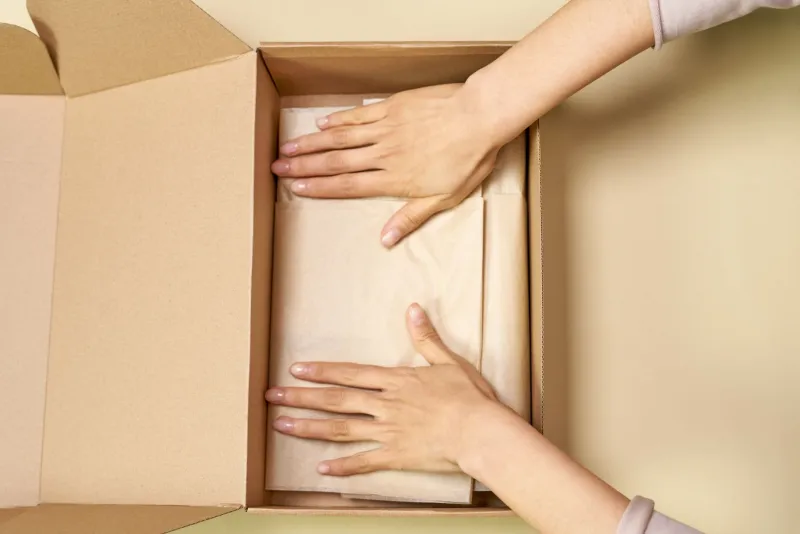
Somewhere right now, a person is sitting in a ring-light halo, scissors in hand, narrating the structural integrity of a cardboard flap to four hundred thousand people who are genuinely invested in the outcome. The box could contain a limited-edition sneaker. A mystery beauty subscription. A Japanese snack haul. A Funko Pop that will immediately go into another box forever. It doesn't really matter. The point is the opening. The ritual. The reveal. And somehow — somehow — you are watching.
Welcome to unboxing culture, the genre that should not exist and yet has quietly eaten a significant portion of the internet's collective attention span. YouTube channels built entirely around unwrapping things command subscriber counts in the tens of millions. "Unboxing" as a search term returns results so dense they could fill a small warehouse. Kids grow up watching other kids open toys on screens instead of, say, opening their own toys. Adults with disposable income watch influencers crack open luxury goods they will never afford. The whole arrangement is objectively bizarre, and yet here we are, refreshing the feed, waiting for the tissue paper to move.
So what exactly is the glitch in our brains that makes this appointment viewing?
The Box Is a Promise
Let's start with the object itself. A sealed package is, at its core, an unresolved narrative. The brain does not like unresolved narratives. It wants closure the way a socket wants a plug. When something is wrapped, taped, sealed, or otherwise protected from immediate inspection, our curiosity doesn't politely wait — it vibrates. Psychologists call this the "information gap" theory of curiosity, and it basically means that the space between what we know and what we want to know creates a kind of cognitive itch that demands scratching.
Watching someone else scratch it still scratches it, sort of. It's secondhand dopamine. Discount resolution. You get the emotional payoff of the reveal without having spent the money, waited the shipping time, or dealt with the existential dread of "did I actually need this." It is, in the most literal sense, outsourcing your excitement to a stranger with better lighting.
It's Giving Church
Here's where it gets genuinely interesting. The structure of a good unboxing video is not random. It follows a pattern so consistent it might as well be liturgical. There's the invocation — the creator addresses the audience, establishes the context, builds anticipation. There's the procession — the physical handling of the box, the reading of labels, the commentary on weight and texture. There's the consecration — the moment of opening, often drawn out, often accompanied by deliberate sounds, careful cuts. And then the revelation — the item emerges, is held up, is examined in the light.
This is a ritual. Not metaphorically. Structurally. The repetition, the call-and-response dynamic with the comments section, the communal anticipation — all of it maps onto the architecture of religious ceremony in ways that are almost too neat to be coincidental. The unboxer is the officiant. The subscribers are the congregation. The algorithm is, presumably, God.
And like any good religious experience, the value isn't entirely in the content. It's in the participation. The comments on a major unboxing video read like a congregation murmuring: I've been waiting for this drop, I ordered the same one, bless, first. People aren't just watching. They're witnessing. There's a difference.
ASMR's Weird Cousin Twice Removed
Then there's the sensory dimension, which is doing a lot of heavy lifting nobody wants to talk about directly. The sounds of unboxing — the crinkle of plastic wrap, the pop of a seal, the soft thud of packing peanuts, the satisfying slide of a well-engineered box lid — are deeply, almost embarrassingly pleasurable to a significant portion of the human population. This is not a coincidence. This is ASMR's more commercially viable cousin, the one who went into content creation instead of art school.
ASMR (Autonomous Sensory Meridian Response, for those who've somehow avoided the entire genre) is the tingly, calm sensation triggered by certain soft sounds and deliberate movements. Unboxing videos deliver this almost accidentally — or rather, the best creators figured out that leaning into the sonic texture of packaging was a feature, not a side effect. The careful peel of tape. The rustle of branded tissue. The click of a magnetic closure. These are not incidental. These are the point.
The tactile experience you cannot have — because this is not your box, in your hands, in your apartment — gets partially reconstructed through sound. Your nervous system, bless its gullible heart, accepts partial credit.
The Democracy of the Drop
There's also a class dimension here that the discourse often skips over because it's uncomfortable. Unboxing culture democratizes access to experiences that are otherwise gatekept by money, geography, or luck. You cannot afford the $400 sneaker. You were not fast enough to get the limited-edition console. You do not live near the pop-up shop. But you can watch someone who did have all of those things open the thing, and for approximately eight minutes, you are adjacent to the experience. You are in the room.
This is not nothing. This is not sad, exactly. It's a reasonable adaptation to a consumer culture that dangles scarcity as a personality trait. When the hype machine creates desire faster than most people can satisfy it, the unboxing video becomes a pressure valve. You get to feel the drop without the financial hangover. You get to participate in the cultural moment without the credit card statement.
Of course, this system also sustains the hype machine by making scarcity content, which makes scarcity desirable, which creates more scarcity, which creates more content. It's a loop that benefits exactly the people who already had the money to buy the box in the first place. But that's a whole other article.
What We're Actually Opening
At the end of the ritual, when the tissue paper is on the floor and the item is in the light, what has actually happened? A stranger experienced a thing. You watched. The comment section briefly became a community. The algorithm noted your engagement and filed it away for later.
And yet it doesn't feel hollow. That's the genuinely strange part. People describe unboxing videos as comforting, as satisfying, as something they put on when they're anxious or can't sleep. The ritual works even when you know it's a ritual. The dopamine lands even when you're fully aware of the mechanism.
Maybe that's the most honest thing unboxing culture reveals about us: we are a species that finds meaning in ceremony, that craves the arc of anticipation and resolution, that will construct a congregation around anything that reliably delivers a moment of shared wonder — even if that moment is a guy in Ohio opening a box of Japanese candy on a Thursday afternoon.
The box is a promise. We just like watching it get kept.