Cringe Is the New Criterion: Why 2015 YouTube at Its Most Chaotic Hits Different Than Anything Your Algorithm Serves You Today
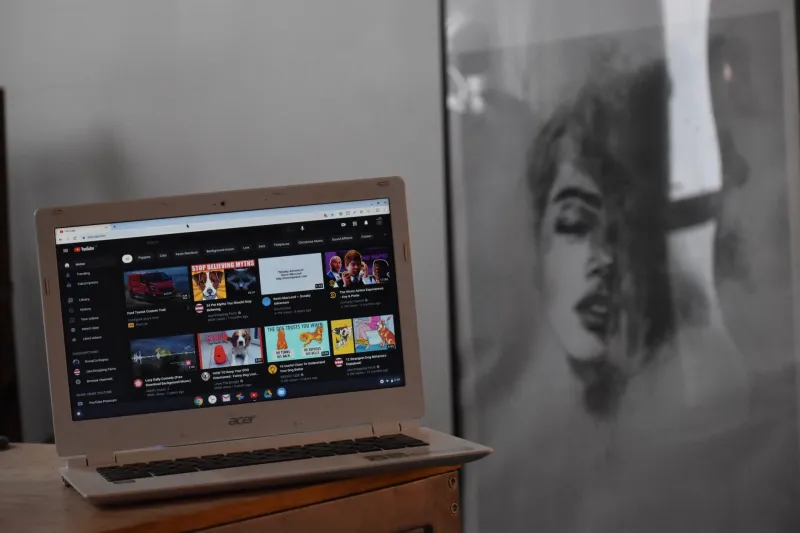
The video has 847 views. It was uploaded in 2014. The title is something like "MY MORNING ROUTINE!! (UPDATED) + LIFE ADVICE" and it features a teenager in front of a ring-lit mirror that is clearly a ring light they just got, demonstrating how they use it. The audio cuts out twice. They apologize for the audio cutting out. The apology is also badly recorded. It is the most compelling piece of media you have watched all month.
This is not a bit. This is a documented cultural phenomenon, and it deserves the full treatment.
The Failure Authenticity Paradox
Here's the thing about genuinely bad old content: it wasn't trying to be bad. That distinction is doing enormous work. The ironic bad-on-purpose content that gets made today — the deliberately lo-fi aesthetic, the performed awkwardness, the strategic roughness — has a tell. You can feel the calculation underneath it. Someone decided this would read as authentic. They were correct, and it still doesn't land the same way.
The 2015 YouTube video didn't decide anything. The person making it was operating without a roadmap because the roadmap didn't exist yet. YouTube was still figuring out what it was. Creators were still figuring out what creators were. There was no established grammar for what a lifestyle video should look like, so people just... made a thing. They made it the way you'd make something if nobody was watching, except they uploaded it publicly because they wanted to be watched, and this tension — the gap between the private energy and the public act — is exactly where all the magic lives.
What the Algorithm Killed and Why We Miss It
Modern content creation exists inside a feedback loop of extraordinary precision. You make something, the algorithm tells you how it performed, you adjust, you repeat. Over thousands of iterations, the content that survives is the content that the algorithm rewards. This process is genuinely good at producing content that performs. It is genuinely terrible at producing content that feels.
The old videos escaped this process because the process didn't exist yet, or because they were made before the creator cared about it, or because they were uploaded and then forgotten — the creator moved on, got embarrassed, stopped making videos — and the video just sat there, aging out of relevance until relevance looped back around.
What you're watching when you watch an earnestly bad 2014 cooking tutorial is a document of human effort that was never optimized. Nobody A/B tested the thumbnail. Nobody consulted analytics to determine the ideal video length. The person just made a thing and put it on the internet with the energy of someone mailing a letter and hoping for the best. That energy is now, somehow, the rarest thing on the internet.
The Specific Pleasure of Watching Someone Believe in Something
There's a subgenre of old YouTube that is particularly potent: the video where someone is extremely confident about something they are extremely wrong about. The 2012 diet advice video. The 2013 life hack that is technically a life hack if you squint. The 2015 relationship advice from someone who was, based on the comments, nineteen years old and had been in exactly one relationship.
The pleasure here is not cruelty — or at least, the best version of this pleasure isn't. It's something more like tenderness. You're watching someone who had not yet been taught to doubt themselves perform their certainty for a camera. The confidence is real. The wrongness is real. The combination is devastating in the best possible way because it looks exactly like being alive.
Polished modern content has been sanded of this quality. The people making it have been trained — by comments, by metrics, by the general vibe of the internet — to hedge, to qualify, to acknowledge the counterargument. The earnest wrongness of old content is now essentially a protected species.
Gen Z Didn't Find This Ironically. That's the Whole Point.
The critical misread about why younger audiences are obsessing over old bad content is that they're doing it as a joke. They're not, or at least not primarily. The ironic appreciation is real but it's not the whole story. There's a genuine emotional response happening that looks like nostalgia but can't be nostalgia because these viewers weren't alive for the original cultural moment.
Call it inherited nostalgia, or maybe pre-nostalgia — a longing for an internet that felt like it was still being invented, that hadn't yet calcified into content pipelines and brand deals and parasocial strategies. The old bad video is evidence that the internet used to be a place where you could just put something weird out there and it would exist. Not perform. Not convert. Just exist.
For an audience that has grown up with every piece of media they consume being aggressively optimized for their attention, something that wasn't optimized for anything is genuinely radical.
The Preservation Instinct
There's a whole ecosystem of accounts now dedicated to surfacing old weird internet content — not the famous stuff, but the forgotten stuff. The videos with 200 views that are somehow perfect. The memes that only circulated in specific corners of Tumblr in 2013. The early-era vines that never went viral but are exactly right.
These archivists are doing something important, even if they'd describe it as "just posting funny old stuff." They're maintaining a record of what the internet looked like before it got good at being the internet. Before it learned to perform itself.
The glitch, in this case, isn't the bad production quality or the cringe energy or the earnest wrongness. The glitch is the sincerity. And it turns out sincerity, once it becomes rare enough, becomes the whole point.