Certified Freaks: How the Weird Girl Finally Inherited the Earth (and the Emmy)
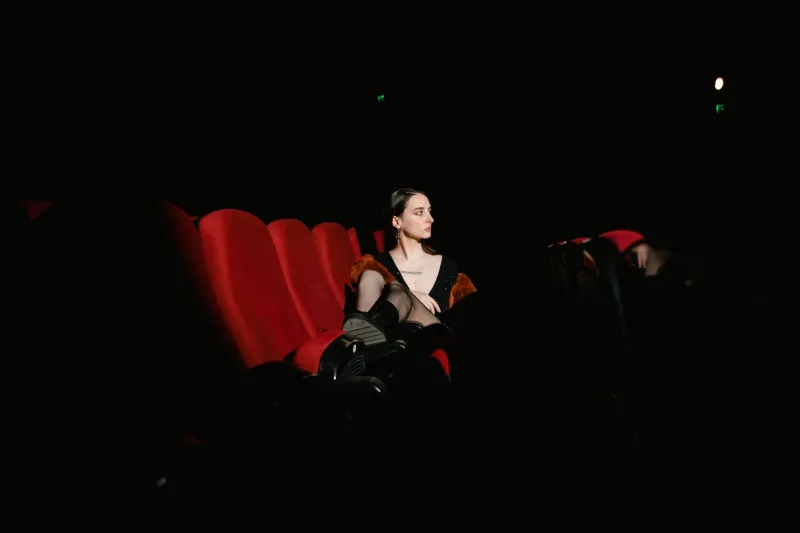
There is a specific type of female character that dominated prestige television and film for most of the 2000s and 2010s. She was deeply troubled but conventionally beautiful. Her complexity manifested as a drinking problem and a tragic backstory. She was, despite everything, still fundamentally aspirational — someone you could imagine being, if you were just a little more interesting and a little more photogenic.
She was not, in any meaningful sense, weird.
That era is over. In its place has risen something far more interesting: the Weird Girl Cinematic Universe. No shared continuity, no crossover events, no post-credits scenes (well, maybe some post-credits scenes). Just a proliferating ecosystem of female characters who are strange in specific, irreducible, deeply personal ways — and audiences who are absolutely feral for them.
Cataloging the Strange
Let's be precise about what we mean, because "weird" is doing a lot of work here and it's worth unpacking.
We're not talking about the Manic Pixie Dream Girl, that much-maligned archetype whose quirks existed entirely in service of a male protagonist's emotional journey. The MPDG was weird for someone else. Her eccentricity was decorative, a personality trait assigned to make her interesting to the audience and desirable to the hero.
The characters driving the current cultural moment are weird for themselves, often in ways that are uncomfortable, off-putting, or frankly kind of alarming. Consider:
Aubrey Plaza's Amy in Emily the Criminal — desperate, furious, and making catastrophically bad decisions with the calm competence of someone who has simply run out of better options. There's nothing aspirational about her situation. There's everything compelling about her.
The women of Severance — Patricia Arquette's Harmony Cobel, who tends a shrine to her boss and keeps a neighbor-boy as an emotional prop; Britt Lower's Helly R., whose rebellion is both heroic and completely unhinged. These are not women you'd want to have brunch with. They are women you cannot stop thinking about.
Anya Taylor-Joy's Beth Harmon in The Queen's Gambit — brilliant, self-destructive, and utterly incapable of the social performance that the world keeps asking of her. Elizabeth Olsen's Wendy in Love & Death, playing the specific, terrifying banality of a woman who simply decides she wants something and takes it.
The common thread isn't darkness or trauma — plenty of boring female characters have those. It's specificity. These women are weird in ways that feel true rather than manufactured, particular rather than generic.
The Economics of Strange
Something structural had to change to make this moment possible, and that something is largely the streaming wars.
Traditional network television operated on a broadcast logic: you needed a show to appeal to the broadest possible audience, which meant sanding off anything too strange, too niche, too alienating. Female characters in this system needed to be legible and sympathetic to the median viewer at all times.
Streaming platforms, particularly in their aggressive content acquisition phase, operated on a completely different logic. Netflix, HBO Max, Hulu — they needed passionate audiences, not broad ones. A show that 3 million people are completely obsessed with is more valuable to a streaming platform than a show that 15 million people watch with mild interest. Obsession drives subscriptions, discourse, and cultural relevance.
Weird characters create obsessive audiences. The algorithm, for once, is working in the freaks' favor.
This created space for showrunners and filmmakers to greenlight stories that would have been considered too risky, too niche, or too female-gaze-y in an earlier era. The result is a golden age of strange women on screen — and the audiences showing up for them are diverse, passionate, and deeply invested in ways that generic prestige drama never managed to inspire.
Why We Needed This (A Brief Cultural Diagnosis)
The rise of the Weird Girl isn't just an industry story. It's a cultural symptom worth examining.
For a long time, the "strong female character" conversation in Hollywood got stuck in a particular groove. Strength was coded as competence, composure, and the ability to do everything a male character could do, but in a way that was never too threatening, too messy, or too hard to root for. The result was a parade of characters who were strong in the most boring possible sense — efficient, controlled, and fundamentally safe.
Real women, it turns out, are frequently none of those things. Real women are contradictory, occasionally irrational, driven by desires they can't fully articulate, capable of tremendous pettiness and tremendous grace sometimes in the same afternoon. The demand for characters who reflected this reality had been building for years, visible in the cult followings around characters like Liz Lemon, Abbi and Ilana from Broad City, and essentially everything Phoebe Waller-Bridge has ever created.
The current moment is that demand finally being met at scale.
There's also a generational dimension. Younger audiences — the ones most likely to be driving streaming metrics and social media discourse — grew up with the internet, which is to say they grew up with access to every subculture, every niche, every community of people who felt like outsiders in their physical environment but found their people online. The internet taught a generation that weird was not a liability. The Weird Girl on screen is a reflection of that.
The Ongoing Expansion
The universe keeps expanding. The Bear's Carmy gets most of the press, but Ayo Edebiri's Sydney is arguably the more interesting character — driven by a specific, almost violent ambition that the show refuses to either celebrate uncritically or punish. Abbott Elementary's Janine Teagues is a specific flavor of well-meaning chaos that feels drawn from life rather than a writers' room. Yellowjackets is essentially an ensemble Weird Girl showcase running for multiple seasons.
None of these women are weird in the same way. That's the point. The Weird Girl Cinematic Universe doesn't have a house style — it has a permission structure. The permission to be specific, to be contradictory, to be interesting in ways that don't resolve neatly into likability.
The perfect heroine had a good run. She was fine. She served her purpose.
But she never made anyone lose sleep trying to figure out what she was going to do next. The weird girls? They've got us completely.