Error 404: Perfection Not Found (And We're Thriving)
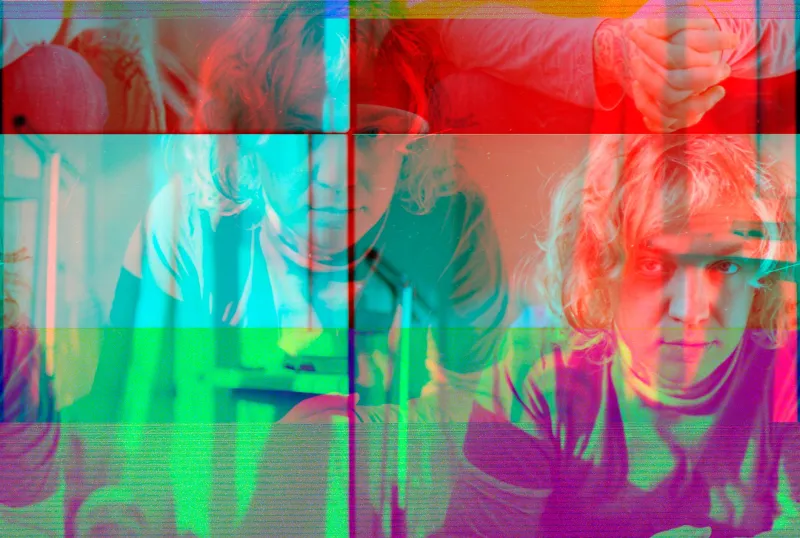
There is a very specific kind of panic that hits when your screen starts fragmenting mid-presentation — pixels bleeding into each other, colors separating like a bad acid trip, your carefully prepared PowerPoint dissolving into digital soup. For most of human history, this was a disaster. Now? It's a mood board.
Welcome to glitch aesthetics, the visual movement that decided the most beautiful thing technology can do is fall spectacularly apart.
From Bug Report to Art Gallery
The lineage of glitch art is genuinely weirder than most origin stories. It didn't emerge from a single manifesto or a celebrated artist's breakthrough moment. It crawled out of the internet's basement — corrupted image files on early forums, the rainbow-striped death screens of aging CRT monitors, the warped audio of a CD that someone left on a hot dashboard in 2003.
Nam June Paik was messing with distorted television signals back in the 1960s, which technically makes glitch aesthetics older than most of its current fans. But the contemporary movement really found its legs in the early 2000s when artists like Rosa Menkman started theorizing about it seriously, arguing that the glitch wasn't a failure of the system — it was the system telling the truth about itself.
Menkman's "Glitch Studies Manifesto" from 2009 reads like the founding document of a very cool, very chaotic religion. The core argument: artifacts, errors, and noise aren't interruptions to digital experience. They are digital experience, stripped of its performative smoothness.
The internet, predictably, took this academic framework and immediately made it into a Tumblr aesthetic.
The Gen Z Alchemy of Loving Broken Things
Here's the thing about growing up in a world where everything is optimized: it starts to feel deeply suspicious. Every feed is curated, every photo filtered, every influencer's kitchen inexplicably pristine. Gen Z, the first generation to be truly native to this hyper-polished digital landscape, developed an almost allergic reaction to seamlessness.
Glitch aesthetics offered something that algorithmic perfection couldn't — evidence of the seams. A glitched image is honest about the fact that it's made of data, that underneath every smooth gradient there's just a bunch of numbers trying their best. There's something weirdly comforting about that.
Designer Petra Voss, who creates glitch-inspired textiles out of her studio in Brooklyn, describes it this way: "My clients — mostly people in their mid-twenties — will specifically ask for something that looks 'broken on purpose.' They want the garment to feel like a screenshot from a dream, not a product shot. The imperfection is the point. It signals authenticity in a way that perfection simply cannot anymore."
This tracks. When everything can be made to look perfect with the right filter and thirty minutes in Lightroom, perfection loses its signal value entirely. The glitch becomes the new luxury marker — not because it's expensive, but because it's real, or at least performing realness with enough commitment to be convincing.
When Gucci Starts Glitching
The mainstream absorption of glitch aesthetics follows a familiar pattern: underground internet culture incubates something genuinely strange, musicians and underground designers adopt it, it filters into editorial fashion photography, and then a luxury conglomerate releases a $2,400 jacket that looks like it was designed by a corrupted Photoshop file.
Björk was doing glitch-adjacent visual work in her music videos long before the term was widely used. Kanye West's Yeezus rollout in 2013 — with its deliberately broken, HTML-primitive website and corrupted visual language — brought the aesthetic to a mainstream hip-hop audience. From there, the pipeline to high fashion was shorter than anyone expected.
Balenciaga's runway presentations have leaned into digital distortion and deliberately ugly interfaces. Supreme has played with corrupted-logo imagery. Even Target, the great democratizer of aesthetic trends, has sold clothing featuring pixelated, intentionally degraded graphics.
The irony is not lost on anyone paying attention: the aesthetic born from the internet's rejection of corporate polish has been purchased, packaged, and resold by corporations at significant markup. Glitch culture's response to this has been, characteristically, to just keep breaking things in new ways the brands can't quite catch up to.
The Glitch Is the Message
What makes glitch aesthetics genuinely interesting — beyond the cool visuals and the satisfying irony of luxury brands selling broken things — is what it says about our relationship with technology.
We built these systems to be invisible, to be seamless, to disappear into the background of our lives. The glitch refuses that. It insists on being seen, on reminding you that the screen is a screen, that the image is data, that the whole smooth edifice of digital life is held together with code that can and will fail.
In an era of AI-generated images that are becoming indistinguishable from photographs, of deepfakes and synthetic media and algorithmic content designed to feel organic, there's something almost politically charged about celebrating the moment when the machine shows its stitching.
The glitch says: I am artificial. I am constructed. I am not pretending otherwise.
Honestly? In 2024, that's the most refreshing thing a piece of media can say.
Glitch Canopy exists in this exact tension — between the polished and the broken, the intentional and the accidental. We're all just corrupted files trying to render correctly. Some of us have just learned to make it look good.