Beautiful Broken: How the Glitch Became the Coolest Thing in the Room
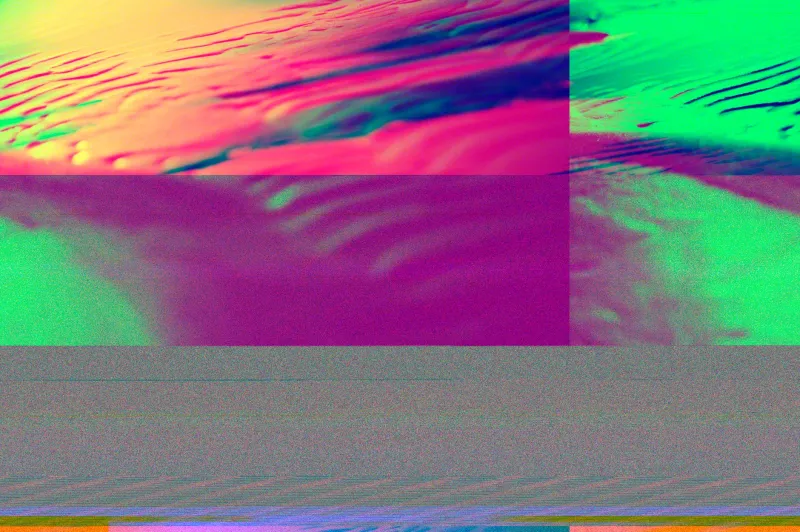
Consider the JPEG artifact. That chunky, pixelated corruption that appears when an image is compressed too aggressively — the little squares of wrong color bleeding into faces and landscapes like a digital bruise. For most of the internet's history, this was a problem. You re-uploaded the file. You fixed it. You moved on.
Now? Someone is selling a hoodie that looks exactly like that. It's $180. It sold out in forty minutes.
Welcome to the glitch era, where the error message became the message, the artifact became the art, and the broken thing became, somehow, the most interesting thing in the room.
From Bug to Brand
The glitch aesthetic didn't appear overnight, but its mainstreaming has been startlingly fast. What began in the early 2000s as a niche art movement — artists like Rosa Menkman and Takeshi Murata were deliberately corrupting image and video files and calling it fine art — spent years percolating through underground music scenes, experimental graphic design, and the kinds of galleries where the wine is free but the vibe is aggressively unreadable.
Then the internet got faster, screens got sharper, and everything started looking too good. Corporate design reached a kind of terminal polish: clean sans-serif fonts, smooth gradients, stock photos of diverse friend groups laughing at salads. Everything optimized, everything frictionless, everything indistinguishable from everything else. And into that vacuum of sameness, the glitch walked in wearing a corrupted graphic tee and immediately became the most interesting person at the party.
By the mid-2010s, glitch elements were showing up in music videos — Kanye, FKA twigs, Oneohtrix Point Never — and in fashion editorial spreads where models looked like they were buffering. By the early 2020s, it was in gaming aesthetics, album artwork, streetwear, and TikTok video filters that made your face look like a corrupted save file. The underground had gone overground, and it brought all its broken pixels with it.
The Y2K Pipeline and the Nostalgia Accelerant
You can't talk about the glitch aesthetic without talking about Y2K nostalgia, because they are deeply, structurally linked. The same generation that's currently obsessed with low-res imagery and digital artifacts grew up watching their parents panic about whether computers would survive the year 2000. They were raised on screensavers, dial-up tones, and the particular visual texture of early digital media — blocky fonts, limited color palettes, that specific greenish glow of a CRT monitor.
For Gen Z, this isn't history. It's childhood. And like every generation before them, they've reached the age where childhood aesthetics start looking cool again, filtered through the particular alchemy of nostalgia that transforms "outdated" into "iconic."
But there's something more specific happening here than simple nostalgia. Y2K imagery carries with it the memory of a moment when technology felt precarious — when the digital world seemed like it might just fall apart. That precariousness reads, in 2024, as honesty. As proof that the machine isn't perfect. As evidence that something real was happening, rather than the seamlessly produced content that now dominates every platform.
Imperfection as Authenticity Signal
Here's the core logic of the glitch aesthetic, stripped down: in a media environment where everything can be perfected, choosing not to perfect something is a statement. It's the visual equivalent of leaving your house in a wrinkled shirt on purpose — a declaration that you're operating outside the system of anxious optimization.
This resonates particularly hard with audiences who grew up watching Instagram's impossible beauty standards warp their self-perception, who watched influencer culture turn authenticity itself into a performance, who saw "raw and real" content become its own hyper-produced genre. The glitch says: this cannot be faked. Except, of course, it absolutely can be — and increasingly is.
This is the central irony that makes the glitch aesthetic philosophically interesting. Intentional glitches are, by definition, controlled imperfections. A fashion brand releasing a "corrupted" graphic tee has run that design through seventeen rounds of revision. A musician adding "analog artifacts" to their track has done so in a $5,000-a-day studio. The rebellion is manufactured. The rawness is a product.
And yet — it still works. Because the gesture toward imperfection is meaningful even when the imperfection itself is synthetic. It's a value statement, a side-taking, a refusal to fully submit to the tyranny of the flawless. Even fake broken is making a real argument.
Where the Glitch Lives Now
Look around and you'll find it everywhere, once you know what you're looking for. In gaming, the "liminal spaces" aesthetic and glitched-out horror games like Cruelty Squad or the visual corruption in indie titles treat digital breakdown as emotional language. In music production, hyperpop and its descendants use clipping, distortion, and pitch artifacts not as mistakes to fix but as textures to build with. In fashion, brands from high-end designers to fast fashion labels are printing scan lines and pixel corruption onto everything from denim to accessories.
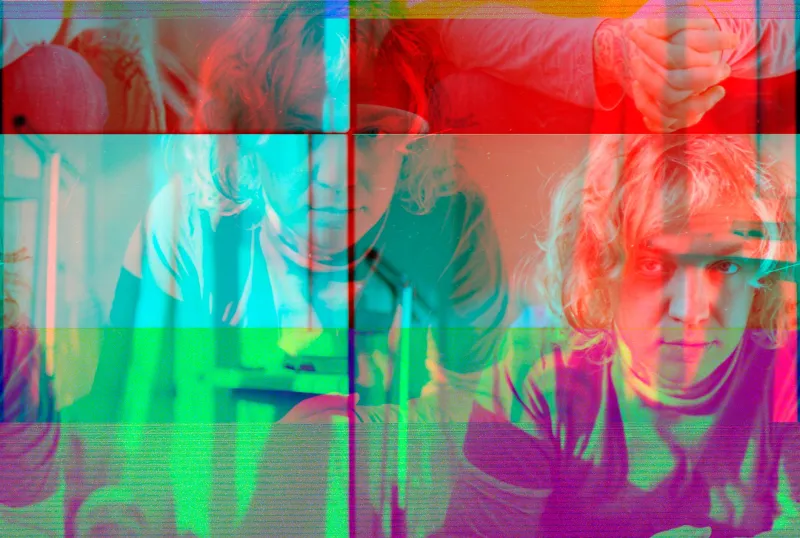
On TikTok, the glitch filter — that jittery, RGB-split effect that makes you look like a signal losing its grip — has become one of the platform's most-used visual tools. It's shorthand for a specific kind of emotional intensity, a way of saying this moment is too much for normal video to contain. It's melodrama, rendered in corrupted pixels.
Even corporate brands — the very entities the aesthetic implicitly critiques — have started adopting glitch visual language in their marketing, which is either the ultimate co-optation or proof that the aesthetic has fully arrived, depending on your level of cynicism.
The Deeper Frequency
What the glitch aesthetic is really doing, underneath all the fashion cycles and platform trends, is making a philosophical argument about what we trust. We've been trained to trust the smooth, the finished, the professionally produced. But smoothness can be manufactured. Perfection can be bought. A glitch, even a fake one, points toward something that resists total control.
In a culture drowning in content engineered to be maximally palatable, maximally shareable, maximally inoffensive — the broken image is a provocation. It says: not everything here is optimized for your consumption. It says: something went wrong, and we're showing you anyway. It says, in the visual language of corrupted files and scan lines and pixel drift: this is what honest looks like now.
And maybe that's enough. Maybe in 2024, the most radical thing a piece of design can do is look like it might fall apart.
The glitch isn't winning because imperfection is trendy. It's winning because perfection stopped being believable.