Glitch Gospel: How Speedrunners Became the Unintentional Philosophers of Our Time
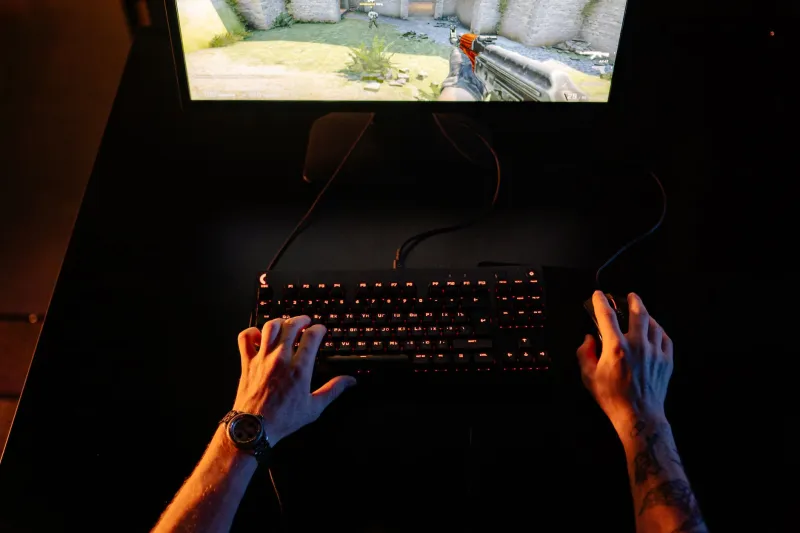
Nobody told the speedrunning community it was doing philosophy. That's kind of the whole point.
These are people who spend hundreds — sometimes thousands — of hours learning how to break video games with surgical precision. They clip through walls. They corrupt memory addresses with a well-timed button press. They find a pixel-wide ledge in a 1996 Nintendo platformer and use it to skip seventeen entire levels. And they stream all of it on Twitch to audiences who cheer like they're watching the Super Bowl.
But here's the thing nobody in the mainstream conversation quite wants to say out loud: speedrunners are doing something that looks a whole lot like art criticism. Accidental, chaotic, deeply nerdy art criticism — but art criticism nonetheless.
The System Is the Canvas
When a game ships, it arrives as a closed world. The developers built the walls, drew the boundaries, decided what was possible. The player is supposed to move through that world in roughly the intended direction, collect the intended things, feel the intended feelings.
Speedrunners look at that closed world and ask: but what if we didn't?
That question sounds simple. It is not simple. Finding a meaningful exploit in a modern game can require reverse-engineering the underlying code, understanding how a game engine handles physics collisions at the sub-frame level, and executing a sequence of inputs with timing so precise it's measured in sixtieths of a second. The people doing this aren't just mashing buttons and hoping for chaos. They're reading the game like a text — looking for inconsistencies, contradictions, the places where the author's intention leaks through imperfectly.
And when they find those cracks? They don't patch them. They live in them.
Wrong Warp as Worldview
There's a legendary exploit in The Legend of Zelda: Ocarina of Time called the "wrong warp." By manipulating which room the game thinks you're supposed to be entering, you can trigger the game's ending cutscene almost immediately after starting. Years of a developer's work, compressed into minutes by understanding the game's logic better than the game itself does.
The speedrunning community didn't discover this and feel guilty. They felt exhilarated. And honestly? Same.
Because what the wrong warp really represents is a kind of radical reinterpretation. The developers said: here is the story, here is the path, here is the meaning we built for you. The speedrunner said: thank you, we found a different meaning, and it lives in this tiny gap between your intentions and your execution.
That's not destruction. That's commentary.
It's the same impulse that drives literary critics to read against a text, or visual artists to repurpose found objects, or remix culture to take someone's polished product and find entirely new emotional registers inside it. The speedrunner is, whether they know it or not, a postmodern practitioner of the highest order.
Perfectionism and Its Discontents
Here's where it gets genuinely weird and genuinely beautiful: speedrunning is also, paradoxically, one of the most perfectionist subcultures on the internet.
These communities obsess over records. They shave milliseconds. They restart runs after a single mistimed jump. They develop elaborate taxonomies — "any%" (finish the game by any means necessary), "100%" (collect everything), "glitchless" (finish fast but only using intended mechanics) — that reveal a deeply nuanced ethical framework about what counts as legitimate mastery.
So on one hand: break every rule, exploit every crack, reject the designer's intended experience entirely. On the other hand: do it perfectly, or it doesn't count.
That tension is not a contradiction. It's the whole point. Speedrunners aren't rejecting systems — they're building new ones on top of the ruins of the old ones. They find the exploit, and then they demand that the exploit be executed with the same discipline and rigor that the original designers brought to their work. They're not anarchists. They're more like constitutional scholars who found a loophole and then spent a decade debating the proper way to use it.
The Human Need to Remake the Rules
There's something deeply American about this, actually. The United States has always had a complicated relationship with its own rules — a founding mythology built on rejecting one system and immediately constructing another, stricter one. The speedrunner embodies that same restless energy: I didn't make these rules, I don't fully accept these rules, but I'm going to understand them so completely that I can move through them in ways their creators never imagined.
And the community that forms around speedrunning? It's one of the more functional subcultures the internet has produced. The annual Games Done Quick charity marathons raise millions of dollars for organizations like Doctors Without Borders and the Prevent Cancer Foundation. The community documents its discoveries obsessively — wikis, spreadsheets, Discord servers running analysis 24/7. Knowledge is shared freely, credit is given generously, and new runners are welcomed with a patience that most online spaces could absolutely learn from.
None of this was planned. It emerged organically from a bunch of people who just really, really wanted to see how fast they could finish Donkey Kong 64.
The Glitch as a Gift
Maybe the most interesting philosophical contribution speedrunning has made is this: the glitch is not a failure. The glitch is information.
Every exploit reveals something true about the system that produced it. A wall you can clip through tells you something about how the engine handles geometry. A wrong warp tells you something about how the game manages its own state. A frame-perfect trick tells you something about the assumptions baked into the design — assumptions that seemed invisible until someone found the exact angle that made them visible.
In a culture that tends to treat imperfection as something to be hidden, patched, and apologized for, speedrunners have built an entire aesthetic around celebrating the productive failure. The glitch isn't embarrassing. The glitch is the most interesting part of the whole game.
Which, honestly, is a pretty solid framework for approaching most things in life.
Not just games. Systems. Institutions. The rules you inherited without being asked. The structures that were handed to you as though they were inevitable and permanent and correct.
The speedrunner looks at all of that and asks: but what if we just tested it?
And then they run.