When the App Broke, the Artist Was Born: TikTok Glitches as Directorial DNA
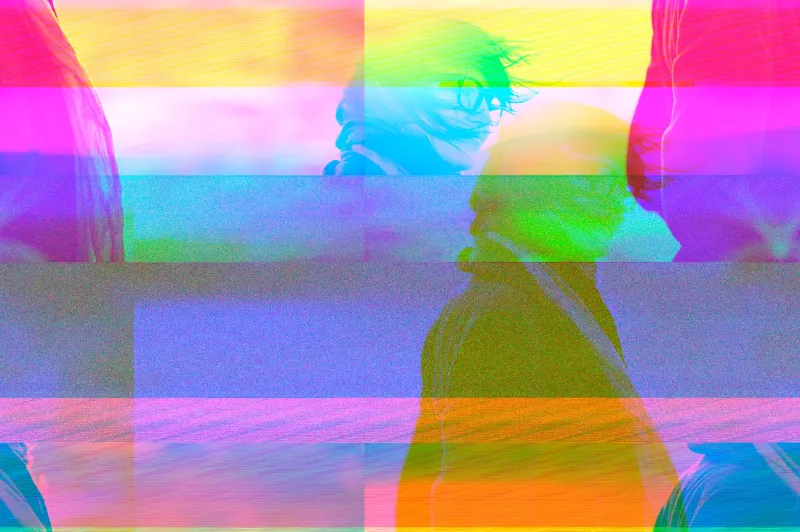
There's a very specific kind of panic that happens when your video upload corrupts mid-process. The frames stutter. The color grading smears sideways like wet paint. A face splits into three versions of itself, each slightly more haunted than the last. Most people hit delete and try again.
A growing number of creators looked at that disaster and thought: wait, actually.
What started as a shared frustration among TikTok users — the platform's notoriously unpredictable compression algorithms, its tendency to mangle footage shot outside its preferred parameters, its occasionally psychedelic rendering errors — has quietly evolved into one of the most genuinely interesting visual movements happening in short-form content today. The glitch isn't the problem anymore. For a specific breed of emerging filmmaker, the glitch is the whole point.
The Happy Accident Industrial Complex
Art history is basically a long, distinguished record of people accidentally doing something weird and then pretending they meant to. Jackson Pollock dripped. Cézanne flattened. Early hip-hop producers looped a skip in a record and invented an entire genre. The tradition of the productive mistake is as old as creativity itself.
What's different now is the speed of canonization. On TikTok, a visual accident can go from "my upload is broken" to "that's their whole thing" in roughly seventy-two hours. The platform's feedback loop is so compressed that aesthetic accidents don't have time to just be embarrassing — they get immediately absorbed, replicated, and eventually sold back to the culture as intentional style.
Creators like @corrupted.lens (a pseudonymous video artist with a following in the mid-six figures) built their entire visual identity around footage that the TikTok compression engine essentially half-destroyed on upload. Early videos showed faces dissolving at the edges, backgrounds pixelating into abstract color fields, motion blur that looked less like camera shake and more like someone had briefly questioned the nature of linear time. The comment sections filled up with people asking what filter they were using. There was no filter. The app just hated the file format.
Except — and here's where it gets interesting — once @corrupted.lens understood why the app was doing that, they started engineering the conditions to make it happen again. Intentionally.
Breaking the Machine on Purpose
This is the part that separates the accidental aesthetes from the actual auteurs: the moment a creator stops being surprised by the malfunction and starts reverse-engineering it.
Filmmakers working in this space have developed remarkably sophisticated informal knowledge bases around platform behavior. They know, for instance, that TikTok's compression algorithm responds differently to footage with extreme contrast shifts versus footage with uniform mid-tones. They know that certain frame rates create specific kinds of stutter artifacts. They know that uploading a video, downloading the compressed version, and re-uploading it multiple times creates a generational degradation effect that looks, frankly, incredible — like found footage from a dimension that's slightly allergic to itself.
None of this is in any official documentation. It lives in Discord servers, in comment section threads, in the kind of niche creator communities that treat platform exploitation as a form of folk knowledge passed between practitioners. It's craft, just not the kind that shows up in film school curricula yet.
Director and visual artist Maya Solano — who goes by @static.pastoral online and has parlayed her TikTok aesthetic into actual commercial work for indie music labels — describes her process as "learning to speak the app's native language, which is mostly screaming." Her videos deploy what she calls "controlled corruption": footage that appears to be falling apart in specific, beautiful ways that she's spent months learning to reliably reproduce.
"People assume it's all just a filter or a plugin," she told an interviewer last year. "But the real stuff comes from understanding how the platform processes information and then giving it information it doesn't quite know what to do with. You're collaborating with the algorithm's confusion."
The Signature That Wasn't Supposed to Exist
What makes the glitch-as-aesthetic movement particularly compelling from a visual culture standpoint is how it inverts the traditional relationship between technical mastery and artistic identity.
Conventional filmmaking logic says you achieve a signature style by exerting more control — better equipment, more precise color grading, tighter editing rhythms. The glitch auteurs are doing the opposite. They're achieving distinctive visual identities by strategically surrendering control to systems that don't care about their artistic intentions. The signature emerges from the negotiation between human intent and machine indifference.
There's something almost philosophically pointed about this, especially right now, when conversations about AI-generated content are dominating every creative industry discussion. These creators aren't replacing human artistry with algorithmic output — they're doing something weirder and more interesting. They're using the algorithm's failures as a kind of co-author. The glitch is credited.
When the Aesthetic Escapes the Platform
The logical endpoint of any TikTok-born visual language is that it eventually migrates off TikTok, and the glitch aesthetic is no exception. Music videos, brand campaigns, experimental short films, gallery installations — the corrupted-digital look has started appearing in contexts far outside the app where it was born.
This migration creates its own strange dynamic. When you deliberately reproduce a glitch aesthetic in a context with full production resources — when you're choosing to make something look like a broken upload rather than actually suffering through a broken upload — the meaning shifts. It becomes a reference, a quotation, a costume. Some practitioners argue this is fine, even interesting. Others think it's the moment the whole thing dies.
The more compelling argument is that the best work in this space has always been about the process, not just the look. Anyone can slap a corruption filter on clean footage. The creators who've actually built something lasting are the ones who developed genuine technical fluency with the platform's behavior — who understand the glitch from the inside out, who can produce it reliably, vary it intentionally, and explain exactly why it looks the way it does.
That knowledge doesn't transfer to a filter. It transfers to a filmmaker.
The Canopy Cracks and Light Gets Through
There's a reason this aesthetic resonates so specifically right now, in this particular cultural moment. We are collectively exhausted by polish. By the algorithmic optimization of everything. By content that has been sanded down to frictionless perfection and delivered to us by systems that know our preferences better than we do.
A video that looks genuinely broken — that carries the visible evidence of its own troubled passage through digital infrastructure — feels like proof of something. Proof that a human made it. Proof that something resisted. Proof that not everything has been optimized into smoothness.
The glitch auteurs aren't just making interesting-looking videos. They're making a case, through form rather than argument, for the value of imperfection as information. Every stutter, every artifact, every moment where the rendering engine gives up and starts improvising — these aren't defects to be corrected. They're the signature. They're the whole thing.
The app broke. The artist was born. And honestly? The timing couldn't have been better.